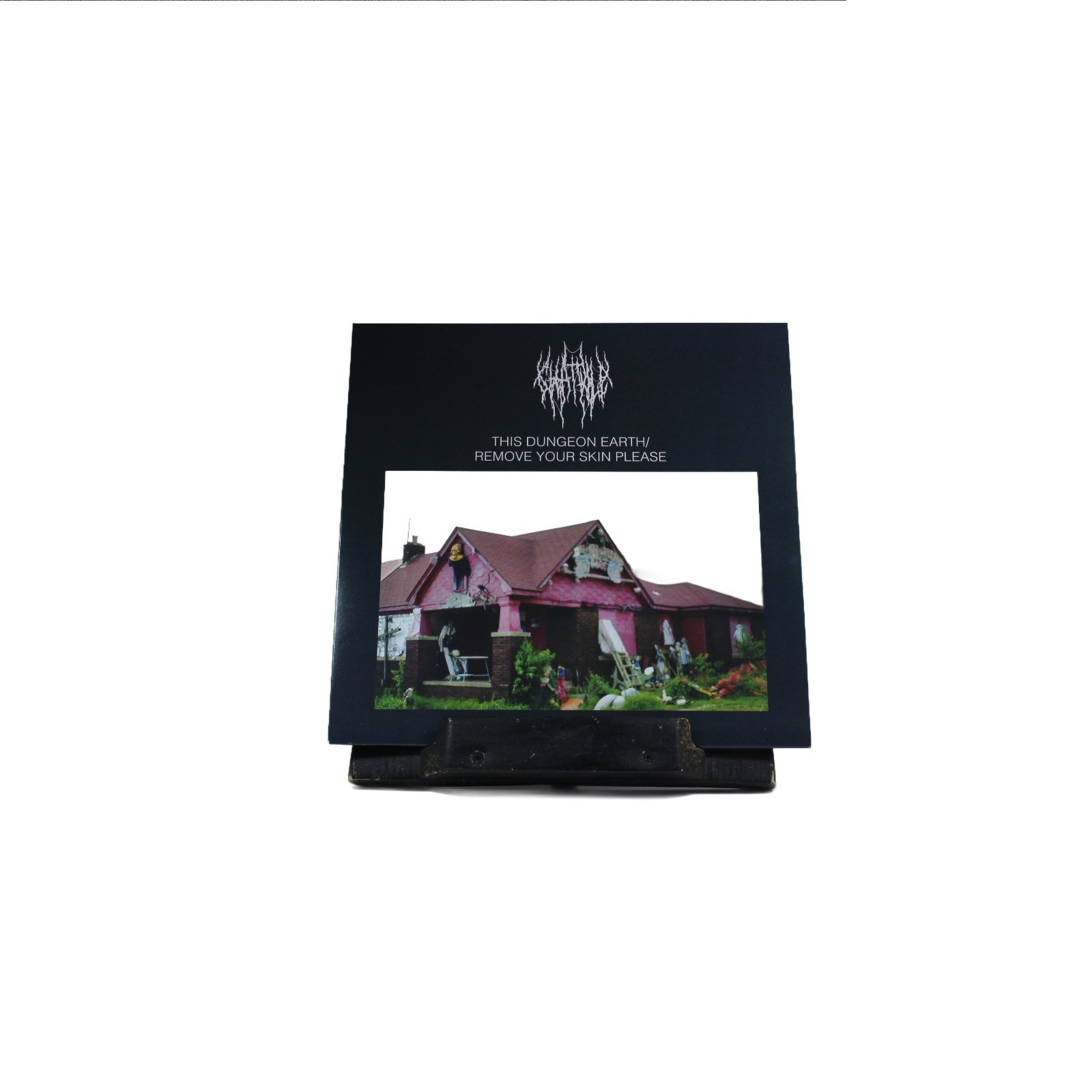
[V3.2 TEST] Six LPs, Several Ways to Build an Animated World
Place the six RedSentient records in a row and the first contrast is printed in their catalog language. One calls itself an “Original Sound Track.” Another is an “Image Album.” A third arrives as “BGM Collection Vol.2,” while later titles favor “Music Collection.” They may share the broad dimensions of LP-era objects, but their names promise different things.
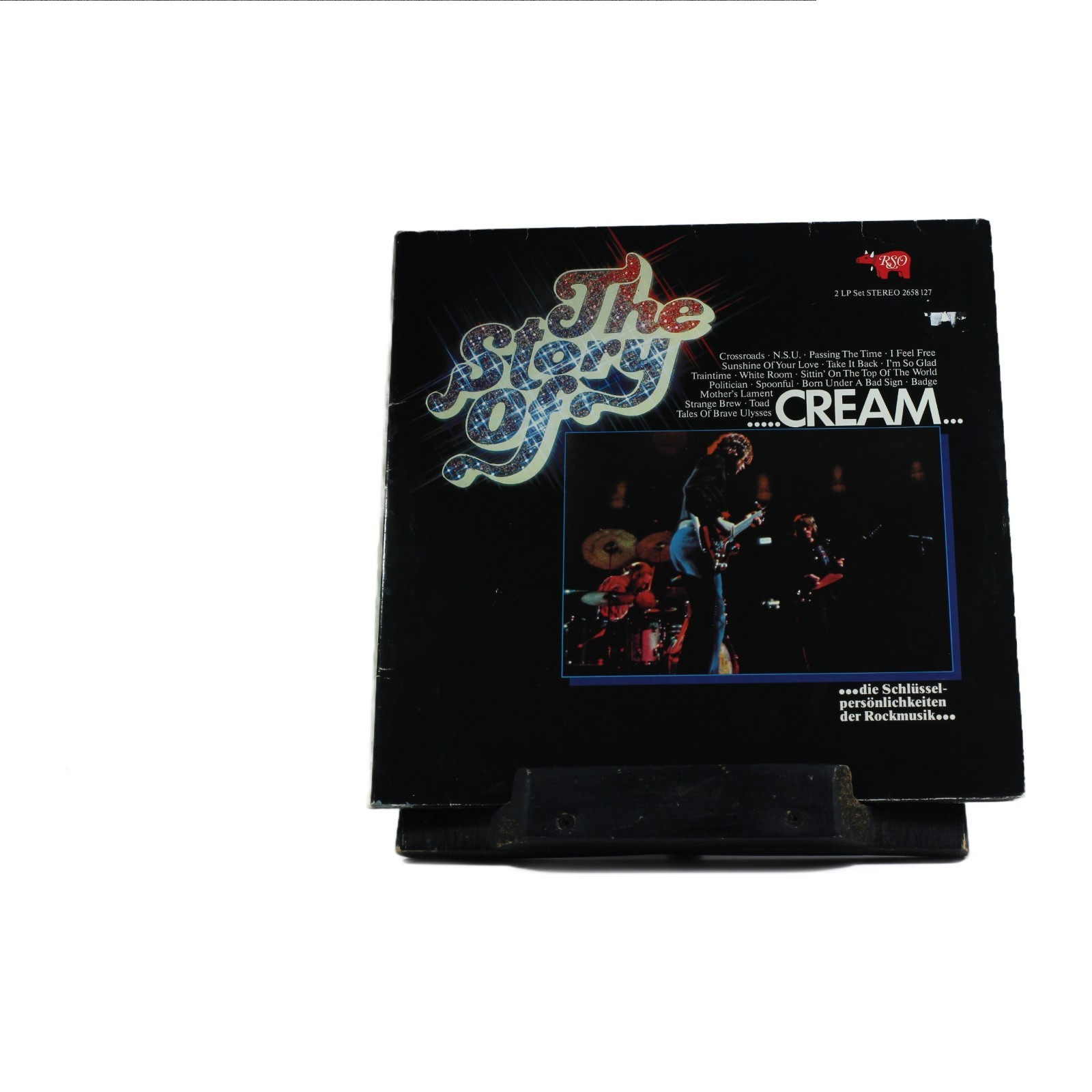
The earliest dated object, ANDROMEDA STORIES ORIGINAL SOUND TRACK, was released by vap on December 21, 1982. Its documented identity is more expansive than the generic English phrase “sound track” suggests: the album is classified as vocal and drama, with original-work and script credits, producers, a voice cast, music composed and arranged by Yuji Ohno, and a theme sung by Stevany. This is not merely a score placed on vinyl. It is an adaptation built from speech, song and music.
Joe Hisaishi’s Arion Image Album: Kaze, Kouya offers a different model. Issued by ANIMAGE in 1985 as catalog 25AGL-3013, it is documented as a Japanese 12-inch, 33-rpm LP containing ten pieces. “Kaze, Kouya” appears in both main-theme and ending-theme forms. The important distinction is categorical rather than sonic: where Andromeda Stories explicitly incorporates cast drama, Arion presents itself as an image album organized as a musical sequence. Their relationship is a supported comparison between adaptation formats, not evidence of shared production.
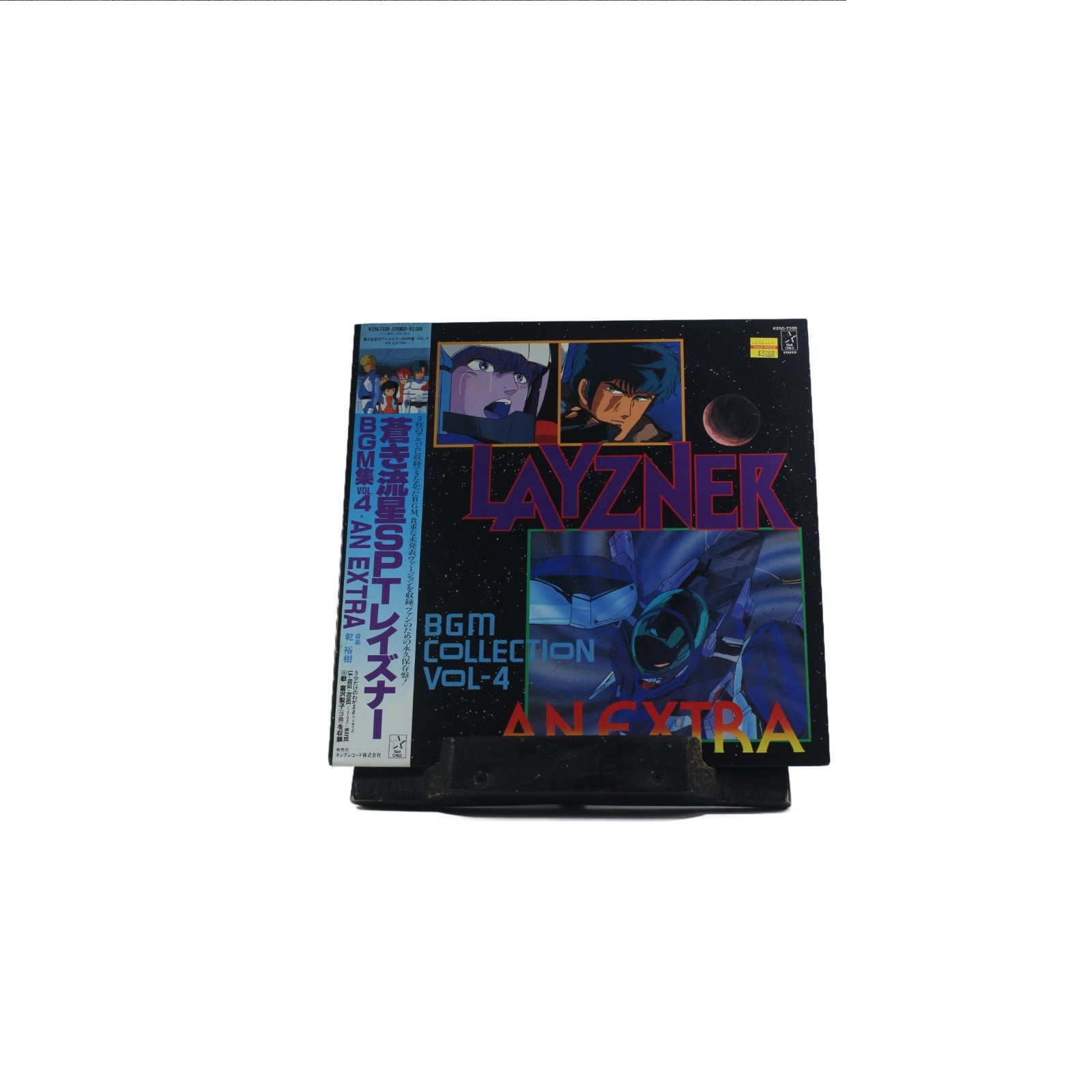
That contrast opens the strongest thread running through the set. These records do not represent one standardized soundtrack philosophy. Across 1982–1987, they document several named forms by which an animation property could become a record: dramatization, image album, numbered BGM archive, soundtrack and mixed music collection. LAYZNER BGM COLLECTION VOL.2 sharpens the point. Issued on STARCHILD, with vinyl catalog K25G-7295, it credits Hiroki Inui for the principal music while also combining background music with vocal material. Hideya Nakazaki, Kei Wakakusa, Yasushi Akimoto and Seiko Tomizawa receive track-specific credits. “Vol.2” also makes seriality part of the object’s identity: this LP presents itself as one installment within a collection.
The Megazone 23 record follows another property-first route. The glyph’s English marketplace wording identifies a “Music Collection Original Soundtrack,” while the matched 1985 Victor LP is documented as Megazone 23 Ongakuhen, catalog JBX-25062, associated with Shiro Sagisu. The title variation matters to a collector because it marks the boundary between listing language and discographic identity. What remains stable is the 12-inch Victor release and its place among the set’s animation-music objects.
Megazone 23 also supplies the clearest direct institutional connection here. It and Sengoku Kitan Youtouden -Hagoku no Shou- belong to the animation-music catalog of Victor Musical Industries. That relationship is documented at the label and manufacturer level; it does not establish common composers, studios or production staff. Youtouden was released on May 21, 1987 and credits NAVARRA, identified with Seiji Hano, alongside Mika Takenaka, Masanori Sasaji and Carmen Maki. The sources securely establish the release identity and Victor affiliation, although they directly document CD and cassette editions rather than independently confirming the glyph’s claimed 12-inch LP variant.
A second trail begins with that same date. Project A-ko 2 ~Daitokuji Zaibatsu no Inbou~ Music Collection also had original editions dated May 21, 1987, including Canyon Records vinyl catalog C25G-0470 and digital catalog D30G-0056. Its documented structure combines BGM, image songs and vocal performances; Ken Morimura is responsible for tracks 6–11, and Miki Ito, Emi Shinohara and Michie Tomizawa perform the final image song.
The paired date is surprising, but it remains a contextual correlation. Youtouden and Project A-ko 2 are both associated with OVAs and reached the catalog on the same day through different record companies. No shared production entity or coordinated campaign has been established. Together with Megazone 23, however, they provide a bounded view of how several OVA-related properties were turned into commercial music packages during the later portion of this five-year span.
Authorship is packaged differently across the row as well. Arion places Joe Hisaishi securely at the release’s artist identity, while Andromeda Stories, Layzner, Youtouden, Megazone 23 and Project A-ko 2 foreground property names and functional labels such as soundtrack, BGM collection or music collection. That is an observable distinction in titles and catalog metadata, not proof that either approach dominated the era.
Return, finally, to the six objects and their printed promises. The drama album asks vinyl to carry an adaptation; the image album makes a composer-led sequence its organizing form; the BGM volume turns score and songs into a numbered collection; the three OVA-related records assemble distinct soundtrack packages under Victor or Canyon. Their shared clue is not simply the twelve-inch outline. It is the changing vocabulary of what an animation record could contain. The firm bridge is Victor’s connection between Megazone 23 and Youtouden; the shared May 21 date is coincidence in context; and the rest of the row remains a comparison among distinct objects, not a hidden unified scene.
2026-08-04 19:33redsentient_musicreportD:1GI:OK
[V3.2 TEST] Six LP Listings, Four Ways to Build an Animation Album
Place the six RedSentient objects in a row and the first clue is grammatical. “Original Sound Track.” “Image Album.” “BGM Collection Vol.2.” “Music Collection.” The marketplace listings present each as a 12-inch record, although the precise vinyl edition of Sengoku Kitan Youtouden -Hagoku no Shou- remains unconfirmed by the retrieved discographies. Their titles nevertheless invite a collector’s question before any needle drops: what, exactly, was an animation album supposed to contain?
The earliest object supplies the most expansive answer. ANDROMEDA STORIES ORIGINAL SOUND TRACK, released by vap on December 21, 1982, credits Yuji Ohno as composer and arranger and Stevany as theme vocalist. More importantly for this comparison, it is classified as both vocal and drama. Its documentation includes a script, producers and an original cast alongside score and theme-song credits. This is not merely a container labeled “soundtrack”; it is an adaptation object, using the record to carry voices, narrative and music together.
Joe Hisaishi’s Arion Image Album: Kaze, Kouya proposes a different identity. The documented 1985 Japanese edition is an ANIMAGE 12-inch LP, catalog 25AGL-3013, containing ten pieces. Kaze, Kouya appears in main-theme and ending-theme forms. Unlike the property-first wording across much of the group, the glyph and resolved catalog identity put Hisaishi’s name plainly at the front. That makes Arion the set’s clearest composer-led object—but only Arion: the evidence does not place Hisaishi on any of the other five records.
Between those poles sits LAYZNER BGM COLLECTION VOL.2. Its title announces serial organization: this is a numbered collection of background music rather than a drama album or an image album. The STARCHILD release is tied to vinyl catalog K25G-7295, with Hiroki Inui credited for the principal music. Yet “BGM” does not mean the package excludes songs. Track-specific credits also name Hideya Nakazaki, Kei Wakakusa, Yasushi Akimoto and vocalist Seiko Tomizawa. The object’s meaningful distinction is therefore curatorial: it gathers background music under a volume number while retaining vocal material and additional contributors.
The strongest direct relationship appears farther along the row. Megazone 23 Ongakuhen—also encountered in marketplace wording as Megazone 23 Music Collection Original Soundtrack—and Sengoku Kitan Youtouden -Hagoku no Shou- both belong to the Victor Musical Industries animation-music catalog. Megazone 23 is documented as a 1985 Japanese 12-inch Victor LP, JBX-25062, associated with Shiro Sagisu. Youtouden was released through Victor Musical Industries on May 21, 1987 and credits NAVARRA/Seiji Hano, Mika Takenaka, Masanori Sasaji and Carmen Maki. This institutional connection is firm; a common composer, animation studio or production team is not. Victor is the bridge, not proof that the two projects were creatively unified.
That bounded link clarifies why the six records work better as a comparative shelf than as a supposed family tree. Together they document multiple commercial forms: Andromeda Stories combines drama, cast and theme music; Arion identifies itself as an image album; Layzner arranges its material as a numbered BGM collection; and the later releases employ soundtrack or music-collection frameworks. Megazone 23 preserves a property-led soundtrack identity within Victor’s catalog, while Youtouden brings a different credited team into that same institutional setting. The correlation is about packaging and content philosophy, not a claim that one model replaced another or dominated the period.
Project A-ko 2 ~Daitokuji Zaibatsu no Inbou~ Music Collection completes the pattern with another mixed form. Canyon Records manufactured original editions dated May 21, 1987, including vinyl catalog C25G-0470 and digital catalog D30G-0056. The collection combines BGM, image songs and vocal performances; Ken Morimura is responsible for tracks 6–11, while Miki Ito, Emi Shinohara and Michie Tomizawa perform the final image song. It is neither an afterthought nor simply another title ending in “Collection”: its documented structure shows the category accommodating score, songs and cast vocals within one package.
Project A-ko 2 also creates the feature’s sharpest coincidence. It and Youtouden share the exact release date of May 21, 1987, and both are associated with OVA products. But they came through different record companies, and no shared staff or production arrangement has been verified. The date is a contextual split screen—evidence that two distinct OVA-related music objects reached the market simultaneously—not evidence of coordination. Likewise, Layzner’s “Seiko Tomizawa” credit cannot be joined to Project A-ko 2’s “Michie Tomizawa” without an authoritative alias source.
Return, then, to that opening row of nouns. Drama. Image. BGM. Soundtrack. Music collection. The six objects share an animation-music context and a marketplace presentation built largely around 12-inch records, but their catalog language preserves distinct ideas about what buyers were being offered. One confirmed Victor relationship and one same-day coincidence make the shelf more legible without turning it into a single lineage. The objects connect most convincingly where their labels, dates and documented contents permit—and stop connecting where the catalog record stops.
2026-08-04 19:10redsentient_musicreportD:1GI:OK
[V3 TEST] The LP That Arrived Before Layzner Had Finished Broadcasting
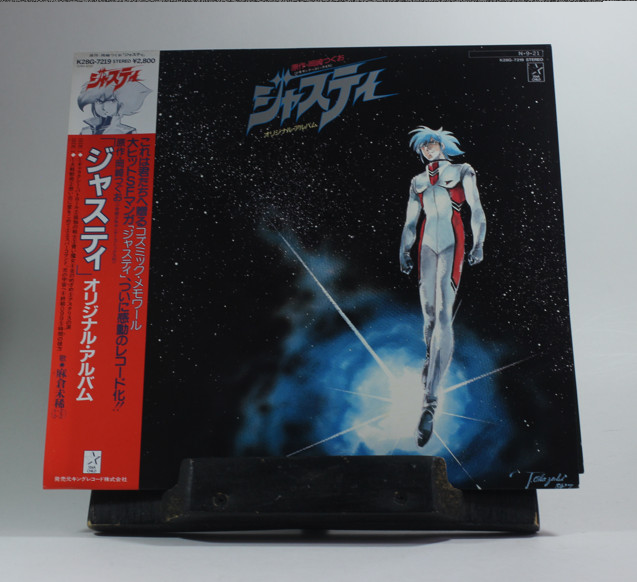
A 12-inch LP sleeve is a contained object. A B2 poster asks for more room. That contrast frames the most revealing trail around 『蒼き流星SPTレイズナー BGM集 VOL.2』: the record is cataloged as a soundtrack, but its reported first-edition bonus carried the work of the television series’ character designer beyond the screen and into the physical package.
The RedSentient glyph begins more plainly. It documents a used record listed as “Layzner BGM Collection Vol-2 12\" LP Vinyl Starchild Records 1986,” offered through a US eBay auction for $50. One copy was available when the record was retrieved; it had no recorded bids, sales or watchers. The listing title supplied the year, format and label language, but its initial parse treated “Layzner BGM Collection Vol” as though it were an artist. The approved identity match corrects that useful machine-made mistake.
Discographic evidence identifies the object as the Japanese LP 『蒼き流星SPTレイズナー BGM集 VOL.2』, catalog K25G-7295, issued on April 21, 1986 for ¥2,500 through King Records’ Starchild imprint. It is not an album by a performer called Layzner BGM Collection Vol. It is the second BGM collection associated with Sunrise’s science-fiction robot television anime 『蒼き流星SPTレイズナー』, with music principally credited to Hiroki Inui.
The distinction opens the package. The LP’s fourteen selections are divided across two sides, combining dramatic BGM cues with the songs 「雨を降らせないで」 and 「5分だけのわがまま」; the program closes with an instrumental version of 「走れメロスのように」. No sonic genre needs to be reverse-engineered from those titles. The documented credits already show that this is a coordinated soundtrack release rather than a single-name artist statement: Inui is credited for music, while release-level records also name Hideya Nakazaki as a composer, Kei Wakakusa as an arranger, Yasushi Akimoto as a lyricist and Seiko Tomizawa as vocalist.
Its first relationship trail is temporal. Sunrise records Layzner as a 38-episode series broadcast from October 3, 1985 through June 26, 1986. Because K25G-7295 appeared on April 21, the LP entered circulation while the original television run was still underway, roughly two months before the final broadcast. This was not a retrospective set assembled after the story had settled into the past. It was a physical extension of a production still moving through its first audience.
That timing becomes more suggestive beside the official 40th-anniversary account of the series’ era. Bandai Namco Filmworks describes a mid-1980s moment in which the real-robot boom had subsided and video and television-game media were changing audience tastes; the account presents Layzner’s pronounced two-part narrative shift as a response to that environment. Director Ryosuke Takahashi later supplied another layer of context, saying that he drew creative energy from everyday life and contemporary affairs, including his expectation that the Cold War order would not change greatly. These remarks illuminate the production attached to the album, not the sound of the LP itself. Still, they reposition the record: its fourteen selections were packaged during an active broadcast whose form belonged to a changing media landscape and whose near-future conception was tied to contemporary assumptions.
The second trail is more tactile. Sunrise credits Moriyasu Taniguchi with the series’ character design, alongside Takahashi as director, Kunio Okawara as mechanical designer and Inui for music. A specialist discographic record states that the LP’s first edition included a newly drawn B2 poster by Taniguchi. That is the verified surprise, with one boundary attached: the poster report has not been independently checked against a scan of an original obi, insert or poster credit.
Even with that qualification, the relationship matters. Taniguchi’s authorship appears in two linked roles: designing characters for television and creating bonus artwork reportedly distributed with the first pressing. The soundtrack package therefore joined two production disciplines around one catalog number. Inui’s credit connects the LP’s program to the series’ music; Taniguchi’s reported poster connects its collectible paper component to the series’ visual authorship. Starchild and King Records supplied the release framework that made those relationships portable as a commercial object.
The surviving sales glyph cannot tell us whether the offered copy retains that poster, an obi or an insert. Nor does its image expose a readable catalog number or sleeve credits; the K25G-7295 identification rests on the strong agreement among title, volume, year, label and LP format across approved references. What remains certain is modest but well patterned: a used 12-inch Starchild record, a soundtrack issued before its television series finished, and a first pressing reportedly expanded by Taniguchi’s B2 artwork. The LP sleeve is still the contained object from the opening. Its relationships are what ask for more room.
2026-08-04 18:54redsentient_musicreportD:1GI:OK
[V3 TEST] A Thin The Herd LP, a Video Deck, and the Long Route from Hammerhead to VAZ
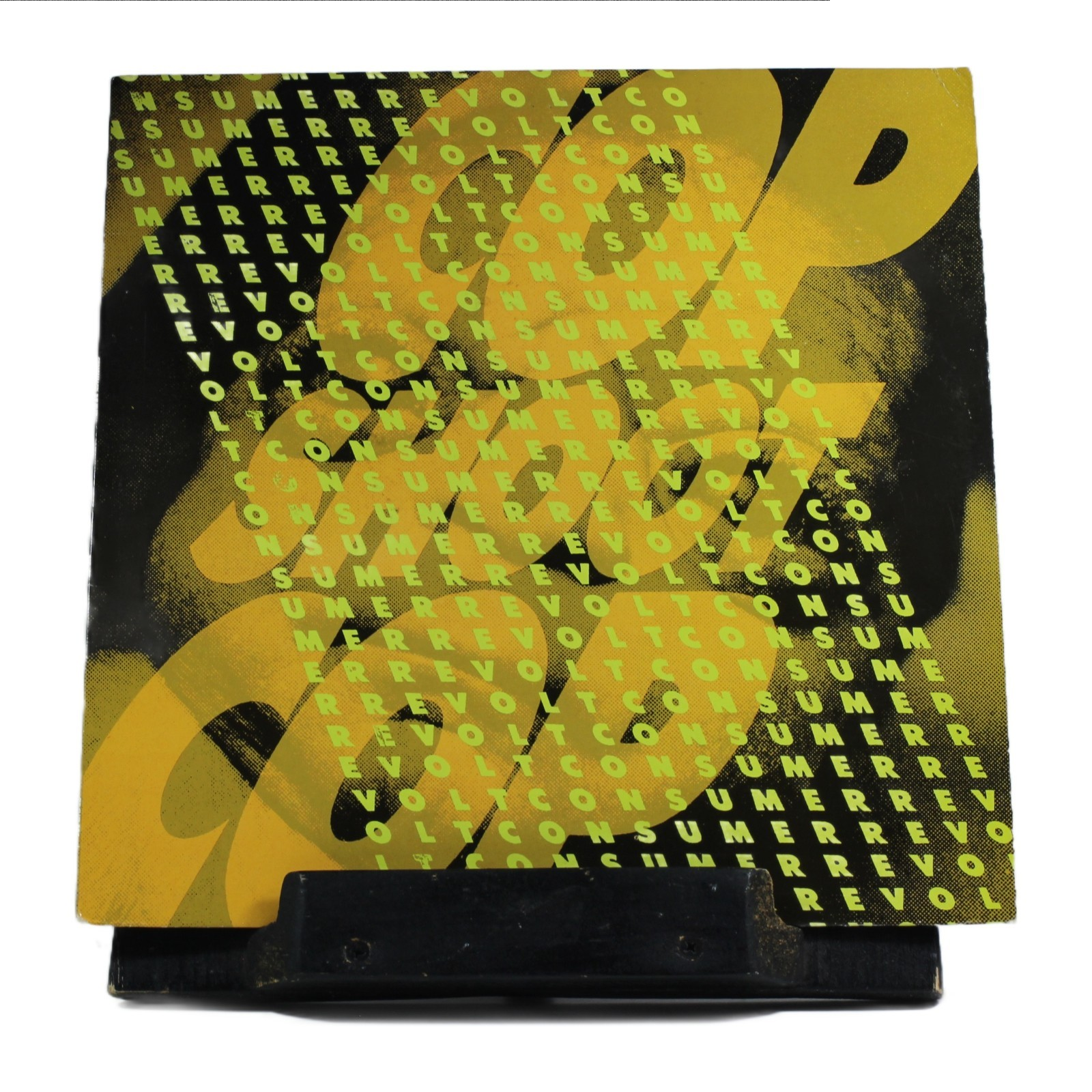
One object is a used 12-inch LP offered at $50. The other is an Amphetamine Reptile video compilation with the unruly title Dope, Guns & Fucking Up Your Video Deck. Between the plain auction data of the first and the appointed host of the second runs a surprisingly orderly trail: VAZ, Hammerhead, two shared members, and Dr. Sphincter.
The RedSentient glyph documents the LP as Vaz—Demonstrations in Micronesia, on Thin The Herd Records, with 2001 in the listing title. It is categorized as a vinyl record and offered by auction, with one copy available, none sold, and—at capture time—no bids or watchers. Those details give the object a precise commercial outline: one used disc, one listing, one current price. They do not settle every part of its history.
The year is the first loose thread. VAZ’s artist Bandcamp dates Demonstrations in Micronesia to April 1, 2000, while Pitchfork and the marketplace title support 2001 in the album’s early chronology. The approved evidence therefore treats the Thin The Herd LP as a 2000/2001 object rather than forcing a single clean date onto it. For a collector, that uncertainty is not background noise. It is part of the catalog description, a reminder that release dates can refer to different stages in the life of an album and that a number printed in a sales title is not automatically the final word.
The identity behind the sleeve is firmer. Demonstrations in Micronesia was VAZ’s debut album. Pitchfork identifies the founding core as Paul Erickson, vocalist and guitarist, and drummer Jeff Mooridian Jr., both formerly of Hammerhead; it also describes the early VAZ album as a bassist-less duo recording. This makes the LP a reset made by two continuing musicians, not an artifact by an isolated new name. VAZ and Hammerhead remain distinct bands, but the personnel bridge is direct.
That bridge leads toward Amphetamine Reptile without turning the LP into an AmRep release. The glyph identifies Thin The Herd in the listing title, and the approved research supports that label association for the early vinyl. The AmRep connection instead belongs to Erickson and Mooridian’s previous band, Hammerhead, and to the network in which Hammerhead and VAZ could later be presented side by side.
Here the second object enters. An official distributor sales sheet for Amphetamine Reptile’s Dope, Guns & Fucking Up Your Video Deck says the compilation included Hammerhead and was hosted by Dr. Sphincter. That is the feature’s verified surprise—not a hidden album credit, and not evidence that Dr. Sphincter had any role in Demonstrations in Micronesia. He is connective tissue in the surrounding catalog: a host attached to an AmRep video release that featured the predecessor band.
The trail does not stop at the video deck. At Amphetamine Reptile’s 25th Anniversary Bash on August 28, 2010, archived event evidence bills Dr. Sphincter as master of ceremonies and lists both Hammerhead and VAZ. The arrangement is unusually neat. A figure associated with presenting Hammerhead in the label’s video world later presided over an event where Hammerhead and the band formed by two of its members shared the advertised lineup.
That billing changes how Demonstrations in Micronesia can be placed. Read alone, the LP is VAZ’s debut: an early Thin The Herd pressing, made by the documented duo of Erickson and Mooridian. Read beside the compilation and anniversary listing, it becomes one catalog marker in a longer pattern of names separating and reconvening. Hammerhead precedes VAZ in the members’ chronology; VAZ establishes its own album identity; years later both names remain legible enough to occupy the same AmRep anniversary program. Dr. Sphincter supplies the odd but verifiable punctuation mark between those moments.
The evidence also sets firm limits. It does not establish album-specific production, engineering, artwork, or songwriting credits. It does not identify the person portraying Dr. Sphincter, and it gives no basis for placing him in the studio, on the LP, or in its promotion. Nor does the physical listing provide audio evidence from which to describe the record’s sound. The useful story is structural: people, releases, labels and event billing, connected without being collapsed.
So the path returns to the used 12-inch at $50. Its listing says 2001; the artist page says 2000. Its title points to VAZ, its personnel point back to Hammerhead, and the wider trail eventually reaches a video host standing over an anniversary bill containing both bands. The opening contrast remains intact: one quiet auction object and one aggressively titled video compilation, joined not by guesswork but by two musicians and a master of ceremonies.
2026-08-04 18:09redsentient_musicreportD:1GI:OK
[V2 TEST] Parallel Pressings: Hammerhead’s ‘Global Depression’ and Vaz’s ‘Demonstrations in Micronesia’ on 12” Vinyl
Place the Hammerhead ‘Global Depression’ and Vaz ‘Demonstrations in Micronesia’ LPs side by side. One is marked 2014, the other 2001. Their labels diverge—Learning Curve for Hammerhead, Thin The Herd for Vaz—but both are rendered as 12-inch vinyl records, their format a shared anchor in an otherwise contrasting presentation. The physicality is undeniable: two used LPs, time-stamped over a decade apart, each captured as an object in RedSentient’s evidence packet.
Let’s first clarify their documented identities. The glyph for the first product, listed as “Hammerhead- Global Depression 12" LP 2014 Learning Curve Vinyl Record,” provides a deterministic parse of artist (Hammerhead), release (Global Depression), year (2014), and format (12" LP). The label field is empty in this case, with the caveat that all such fields are “provisional until human review.” The second record is parsed from “Vaz- Demonstrations in Micronesia 12" LP Vinyl Thin The Herd Records 2001,” identifying Vaz as artist, ‘Demonstrations in Micronesia’ as the release, 2001 as the year, and the label as “LP Vinyl Thin The Herd Records.” Again, all these details are provisional, but both objects are indisputably 12-inch LPs and categorized as used vinyl records.
Both releases are directly represented by their respective RedSentient product glyphs. There is no ambiguity in their basic catalog presence: the Hammerhead LP is matched to ‘Global Depression’ and credited to Hammerhead, while the Vaz LP is matched to ‘Demonstrations in Micronesia’ and credited to Vaz. The glyphs, through their deterministic parses, make no additional claims about the content or personnel of the albums beyond what is present in the listing titles.
The first relationship trail emerges through format. Each listing independently and explicitly identifies its record as a 12-inch LP. The evidence packet includes an approved relationship stating that these two glyphs "share the same listed format"—an assertion based on “exact normalized glyph match.” This shared format is the only directly documented bridge between the two, and it is not implied to signify more than a technical or collector-oriented similarity. Still, it’s noteworthy: despite differences in artist, year, and label, both releases were pressed in the same physical form, inviting side-by-side shelving or comparison by collectors.
A second trail appears in the release years. The Hammerhead LP is identified with 2014; the Vaz LP with 2001. The evidence packet includes approved relationships between the releases and their respective years, but it makes no claim about causation, influence, or artistic lineage. The records are separated by thirteen years and, curiously, this temporal gap is the largest contrast the evidence allows us to assert. There’s no basis to claim a shared scene, movement, or personnel—only the shared vinyl format and the fact that both releases are cataloged through RedSentient’s system.
Here’s where the relationship between the records becomes more than an exercise in matching data points. For collectors and historians, the act of pairing two 12” LPs across different eras and labels, each with their own unique catalog context, offers a reminder of the way format can function as both a bridge and a boundary. The presence of both records in the same evidence packet, with shared physical dimensions and status as used objects, highlights the enduring appeal and practicality of the 12-inch LP format. At the same time, the absence of evidence for a deeper artistic, geographic, or personnel connection forces us to focus on what is actually documented: the objects themselves, their years, their credited artists, and their labels as parsed from listing titles.
Surprisingly, the closest kinship between the two LPs is not rooted in music or history, but in format. The RedSentient evidence packet draws a line directly between the Hammerhead and Vaz releases not through genre, influence, or even label, but through their shared existence as 12-inch LPs. This is a reminder that, in cataloging, sometimes what’s most concrete is not the music, but the medium.
Returning to the physical objects, the Hammerhead and Vaz LPs remain distinct yet parallel, their shared format the only officially recognized link. The evidence boundary is clear: without further documentation, nothing more can be asserted about their relationship. In this case, RedSentient’s disciplined methodology ensures that only what is present in the approved data is passed along—leaving collectors and listeners with two well-defined records, a shared format, and a gentle nudge toward discovery through what remains unspoken.
2026-08-04 18:03redsentient_musicreportD:1GI:OK
[V2 TEST] Parallel Grooves: Tracking the Vinyl Stories of Andromeda and Layzner
Picture two 12-inch LPs side by side: one inscribed with the title "Andromeda Stories Original Sound Track" and the other marked "Layzner BGM Collection Vol-2." Both are pressed on vinyl, both show their age with a gentle patina, and both once spun out stories beyond the grooves. Yet, at first glance, their worlds are kept apart by time, title, and label—a concrete contrast in the collector’s crate.
Let’s ground these records in their documented form. The first, "Andromeda Stories Original Sound Track 12" LP Vinyl Vap Records 1982," is listed with the release identity parsed directly from its title. The glyph lists the artist as "Unknown artist" and the release as "Andromeda Stories Original Sound Track," with a year of 1982 and the label "LP Vinyl Vap Records." The format, as confirmed by the listing, is a 12-inch LP. All this information is derived by deterministic listing parse, flagged as requiring review, but rooted in the direct product data.
The second record, "Layzner BGM Collection Vol-2 12" LP Vinyl Starchild Records 1986," is parsed similarly. Here, the glyph names the artist as "Layzner BGM Collection Vol," the release as "2," and the year as 1986. The label is identified as "LP Vinyl Starchild Records," and, again, the format is a 12-inch LP. This, too, is based on the listing title and deterministic parsing, with the same review caveat.
These two objects are not just isolated artifacts; they exist in an evidence-backed relationship web. The foundational link is that each product glyph represents a specific release, as confirmed by approved relationships. For "Andromeda Stories," the product glyph is approved as representing its release, and likewise for "Layzner BGM Collection Vol-2." This means that, from an archival and cataloging perspective, each physical LP in a collector’s hands is directly tied to a documented release entity, not a generic or misattributed item.
Moving along the evidence chain, both releases are documented with their respective labels and years. For "Andromeda Stories," the glyph identity links the release to Vap Records and the year 1982. "Layzner BGM Collection Vol-2" is connected to Starchild Records and the year 1986. These relationships are not inferred from design or hearsay but are specifically listed in the product data. It’s a collector’s reassurance: these are not reissues or ambiguous pressings (at least as far as the supplied evidence goes), but specific editions with a clear documentary trail.
A longer look at the relationship pattern reveals something quietly surprising. Despite both being Japanese 12-inch LPs from the 1980s, there is no approved evidence connecting them through artist, franchise, or direct creative personnel. The artist field for "Andromeda Stories" remains "Unknown artist," while "Layzner BGM Collection Vol-2" is attributed in the glyph as "Layzner BGM Collection Vol," which may point to a series rather than a named composer or performer. This lack of overlap is not a gap in research but a boundary marked by the evidence: the two records are parallel lines on the timeline rather than intersecting paths.
What does this pattern mean for collectors or historians? The relationship (or, more strictly, the lack thereof) reshapes how we read these LPs together. Instead of seeing them as parts of a shared series, label catalog, or creative team, the evidence positions them as genre-adjacent but institutionally distinct. Their only confirmed commonalities are the physical format, the temporal proximity of their releases (1982 and 1986), and their preservation within the same collecting ecosystem. The surprise, then, is not in an unexpected connection, but in the discipline of the evidence: even with similar surface traits, these records cannot be merged in narrative or pedigree without overstepping the documentary boundary.
Returning to the objects themselves, their identities are now more sharply defined. The "Andromeda Stories" LP stands as a 1982 Vap Records release, artist unknown, and the "Layzner BGM Collection Vol-2" as a 1986 Starchild Records pressing, with the artist field reflecting the title’s series structure. Both are represented by their product glyphs, and both are anchored to their years and labels by approved relationships—nothing more, nothing less. This is where the evidence boundary rests: what is not documented in the glyphs, relationships, or parsed data cannot be claimed. For collectors, that’s both a limitation and a kind of clarity—a callback to the concrete contrast that opened this piece, and a reminder of the discipline that shapes every catalog.
2026-08-04 17:41redsentient_musicreportD:1GI:OK
[TEST] Lene Lovich: New Toy in the RedSentient Archive
Some objects simply catch the gaze with their combination of physical presence and concise, direct identity—this 12" EP, titled “New Toy” and attributed to Lene Lovich, is one such example. The listing’s straightforward headline—“Lene Lovich - New Toy 12" EP Single 1981 Stiff Epic Vinyl Record”—offers a brisk invitation to explore what is, and what is not, presently known about the record itself.
The release identity, as deterministically parsed from the eBay listing title, is clear: artist Lene Lovich, release New Toy, and a year of 1981. The glyph notes that this parsing is provisional and will require later editorial review, yet the confidence in the parse is marked as deterministic. The format is identified as a 12" EP, adding a tactile specificity to the release. No additional details—such as official label, variant, or catalog number—are supplied in the glyph, nor does the title’s mention of “Stiff Epic” receive further confirmation from the underlying data, leaving the label field blank for now.
Physically, this is a used vinyl record, offered in the “Vinyl Records” category on eBay’s US site. The auction format, with a starting price of $15 USD, frames the item within a marketplace context, but does not attempt to assign broader cultural or collector value. The listing documents a single available copy and no prior sales, watchers, or bids at the time of glyph intake. The auction window is precisely dated, beginning August 1, 2026, and ending August 8, 2026, a one-week span that gives this object a temporary but definite presence in the market.
The glyph includes a primary image (downloaded and archived at the time of intake), but the article’s evidence boundary prohibits drawing any inferences from cover art or photography. The listing provides no additional description or summary, and no track details, personnel, or genre tags are present. Notably, the glyph’s constraints remind us to avoid assumptions about sound, style, or influence; all that is directly present is the parsed headline, the physical format, and the context of its marketplace listing. Identifiers like UPC, EAN, or catalog numbers remain unknown, as do any specifics about the pressing or label variant. The keywords attached—“lene,” “lovich,” “toy,” “single,” “1981,” “stiff,” “epic”—reflect parsing conventions rather than confirmed attributes.
In summary, this Lene Lovich “New Toy” 12" EP from 1981, as documented in the RedSentient archive, stands as a precisely delimited physical artifact. Its auction listing provides a fleeting market window and a fixed set of details: artist, release, year, format, and physical condition. Everything else—sound, place in discography, or the relevance of “Stiff Epic”—remains to be verified. The object’s appeal, then, is in its material certainty and in the questions it leaves open, much like the initial sight of a record sleeve that invites but does not explain. As the auction clock ticks, the New Toy’s story in the archive is all about what is present, and the curiosity of what is not.
2026-08-04 17:37redsentient_musicreportD:1GI:OK
[TEST] Inside Unknown artist — Andromeda Stories Original Sound Track
In the RedSentient collection, the object at hand is a 12" LP titled "Andromeda Stories Original Sound Track." The physical listing originates from an eBay auction, where the seller identifies it as a Vap Records release from 1982. The record, according to the glyph, is pre-owned and available as a single unit. Its presence in the vinyl records category and the details parsed from the listing title make it a tangible specimen of early 1980s soundtrack publishing, though much remains to be confirmed.
The glyph directly documents the product via a normalized eBay listing. The item number is 206458652865, and the listing's primary image is cataloged under data/ebay/images/206458652865.jpg. The glyph factually confirms the record is a "12" LP Vinyl" and is being sold in the US auction market. The year 1982 is attached as a facet, and the current asking price is $50 USD. The auction format is fixed for a one-week window, with no watchers or bids at the time of intake. The seller lists the object with sparse description, leaving the record’s contents, track listing, and internal artwork unaddressed.
The title, as parsed by the glyph, serves as the default identity: "Andromeda Stories Original Sound Track 12" LP Vinyl Vap Records 1982." The parsing algorithm deterministically extracts "Unknown artist" (as no explicit artist is named), "Andromeda Stories Original Sound Track" as the release, "Vap Records" as the label, and "1982" as the year. These attributions are provisional and await human review. The format is parsed as "12" LP," again from the listing title. No variant, catalog number, or additional manufacturing details are present in the glyph. The listing does not supply a brand, manufacturer, or designer, and leaves genre and franchise unclassified. The only supplied keywords are "andromeda," "stories," "original," "sound," "track," "vap," and "1982."
As a collector-friendly aside, the absence of a catalog number or matrix runout in the documented fields may slow variant identification, but such gaps are not unusual in intake from generalist auction platforms.
Many particulars remain outside the evidence boundary of this glyph. The actual music, the contributing composers or performers, recording circumstances, and even the original market for the release are unknown. No track names, genre tags, or liner note excerpts are present. The glyph provides no evidence of condition beyond the "Used" flag; sleeve grading, vinyl wear, or inserts are not described. The label history, distribution context, and any connection to a wider franchise or media property are also unconfirmed. As of this intake, the record’s story is defined only by what the seller chose to enter and what the glyph parsed. Everything else, for now, remains to be discovered.
Turn-based v1 - collect nodes to reveal report sections
(collect a node to reveal text)
**Report 29: Pattern Identification in Biodiversity-Integrated Design Applications**
**Question:**
What pattern emerges in the application of biodiversity-integrated design within urban and architectural contexts, based on recent evidence?
**Pattern Observed:**
Across verified sources, a recurring pattern is the integration of structured knowledge frameworks—such as pattern languages and knowledge graphs—into both the educational and professional practice of biodiversity-integrated design. Specifically, the incorporation of knowledge graph-enhanced pattern languages in architectural education is highlighted (Nature, "Knowledge graph-enhanced pattern language for biodiversity integration in architectural education"). This trend facilitates the translation of ecological principles into actionable design strategies, supporting the systematic and repeatable inclusion of biodiversity goals in urban planning.
Additionally, professional organizations and studios (e.g., Land Studio, as referenced in Inside Ecology) consistently emphasize nature-led design as a guiding mechanism, indicating a decade-long application trajectory. These efforts are not limited to green spaces; there is explicit expansion toward broader urbanism strategies that embed biodiversity considerations in various project phases (weforum.org, "How to create nature-positive urbanism beyond green spaces").
**Noted Deviation or Uncertainty:**
While the evidence establishes the prevalence of knowledge frameworks in guiding biodiversity integration, there is incomplete information regarding the long-term impact or measurable ecological outcomes of these approaches. No direct causal links between the adoption of these frameworks and quantifiable biodiversity gains are presented in the cited sources.
**Stabilization:**
The pattern of employing structured, knowledge-based design tools in both education and practice is well-supported. However, evaluation of ecological effectiveness remains outside the current evidence boundary.
Turn-based v1 - collect nodes to reveal report sections
(collect a node to reveal text)
REPORT 20
Question: What recurring challenges are evident in rapidly developing cities, based on recent evidence?
Pattern Observed
Recent sources indicate that rapidly growing cities consistently encounter two primary challenges: increased vulnerability to environmental hazards and rising mental health risks. Evidence from the World Bank highlights the necessity of strengthening flood resilience as urban populations expand (“Strengthening Flood Resilience in Rapidly Growing Cities”). Concurrently, reporting from Medical Xpress details a pattern of heightened mental health risks associated with the pressures of urban growth (“Growing cities pose rising mental health risks”). The convergence of these issues suggests that urban expansion typically outpaces the development of both physical infrastructure (for disaster mitigation) and social infrastructure (for public health).
Deviation or Uncertainty
While evidence confirms the prevalence of these challenges in multiple contexts, it is uncertain to what extent specific interventions—such as design-focused urban planning (noted in “Bangkok Design Week 2026 positions design as a survival tool for cities and communities”)—directly mitigate either environmental or mental health risks. The available evidence does not quantify the effectiveness or adoption rates of such strategies across different cities.
Boundary
This report is bounded to patterns and uncertainties directly supported by the cited sources. No inference is made about cities or interventions not explicitly referenced in the evidence base.
2026-05-06 13:46biomedomainD:8GI:OKN:163
Ecolope Envelope Node built as serviceable infrastructure
BIOME#163
Domain: biomeCard ID #163Difficulty 8
near future biodiversity integrated architecture in temperate forest clearing compatible with modular replacement
A believable concept draft: clean enough to trust, worn enough to be real. Designed under harsh variance: heat spikes, storms, supply gaps, and water uncertainty. Style: timber canopy habitat architecture. Biome: temperate forest clearing.
2026-04-13 23:02faunadomainD:7GI:OKN:150
Roofscape Habitat Node with modular habitat interfaces
FAUNA#150
Domain: faunaCard ID #150Difficulty 7
multispecies envelope and corridor design in alpine ridge habitat station compatible with modular replacement
A believable concept draft: clean enough to trust, worn enough to be real. Designed under harsh variance: heat spikes, storms, supply gaps, and water uncertainty. Style: parametric biomorphic architecture. Biome: alpine ridge habitat station.
2026-04-13 22:58biomedomainD:9GI:OKN:148
Ecological Infrastructure Node for parametric biomorphic architecture
BIOME#148
Domain: biomeCard ID #148Difficulty 9
near future biodiversity integrated architecture in alpine ridge habitat station tuned for low maintenance operation
A practical concept where architecture and ecology operate as one maintainable system. Designed under harsh variance: heat spikes, storms, supply gaps, and water uncertainty. Style: parametric biomorphic architecture. Biome: alpine ridge habitat station.
2026-04-06 00:49faunadomainD:3GI:OKN:145
Ground Interface Node built as serviceable infrastructure
FAUNA#145
Domain: faunaCard ID #145Difficulty 3
multispecies envelope and corridor design in coastal mangrove shoreline built around closed loop water
A near future module that treats habitat as an interface specification and human work as part of the loop. Designed for steady operation with seasonal tuning and routine maintenance. Style: coastal flood control architecture. Biome: coastal mangrove shoreline.
Turn-based v1 - collect nodes to reveal report sections
(collect a node to reveal text)
**Report 13: Application of Attention Regulation Mechanisms in Technological and Therapeutic Contexts**
**Question:**
How are attention regulation mechanisms being applied across technological and therapeutic systems, and what patterns of integration are observable in current evidence?
**Pattern Observed:**
Analysis of recent evidence reveals a recurring integration of digital and neurophysiological interventions targeting attention regulation. Specifically, digital tools such as AR digital picture books are being employed to enhance attention and emotion regulation in children with ADHD (news_google_com_20260213_100203_647f682e). Additionally, combined modalities, including brain stimulation paired with virtual reality, are reported to improve attention levels (news_google_com_20260213_100209_86a382d0). There is also evidence of art therapy, informed by electroencephalography data, used to improve attention, relaxation, and emotional well-being in college students (news_google_com_20260213_100208_d1eee2be).
These applications span both educational and clinical settings, indicating a pattern where technological augmentation is increasingly supplementing or guiding traditional therapeutic methods. The interventions consistently rely on measurable outcomes (e.g., psychological well-being, attention levels) and frequently incorporate real-time feedback mechanisms.
**Deviation or Uncertainty:**
While evidence indicates the use of prediction markets described as "attention markets" (news_google_com_20260213_100206_bde2488d), the specific mechanism by which attention regulation is operationalized in this financial or behavioral context remains unclear. The lack of direct evidence on causal pathways or outcome measurements in this application constitutes an area of uncertainty.
**Stabilization / Boundary:**
Current evidence supports the conclusion that attention regulation mechanisms are actively being adapted within digital and therapeutic systems, with a clear trend toward technological integration. However, the operational specifics in financial or market-based contexts are not yet substantiated. Further clarification is required to delineate the boundaries of attention regulation beyond clinical and educational domains.
2026-04-05 17:53biomedomainD:8GI:OKN:144
Ecological Infrastructure Node for subterranean biodiversity observatory
BIOME#144
Domain: biomeCard ID #144Difficulty 8
near future biodiversity integrated architecture in desert oasis settlement edge compatible with modular replacement
A practical concept where architecture and ecology operate as one maintainable system. Designed under harsh variance: heat spikes, storms, supply gaps, and water uncertainty. Style: subterranean biodiversity observatory. Biome: desert oasis settlement edge.
2026-04-05 17:51statedomainD:8GI:OKN:143
Stability Window Node for futurist modular habitat bridge
STATE#143
Domain: stateCard ID #143Difficulty 8
operational thresholds and stabilization in wetland river delta compatible with modular replacement
A believable concept draft: clean enough to trust, worn enough to be real. Designed under harsh variance: heat spikes, storms, supply gaps, and water uncertainty. Style: futurist modular habitat bridge. Biome: wetland river delta.
2026-04-05 17:07cognitive_loadreport+gameD:1GI:OK
Cognitive load
Turn-based v1 - collect nodes to reveal report sections
(collect a node to reveal text)
Report 10: Cognitive Load in Human-Technology Interaction—Patterns and Limitations
Question: What is a consistent pattern in reported effects of technology on cognitive load, and where does uncertainty remain?
Pattern Observed
Across recent reporting, a recurring pattern is the interaction between advanced technology adoption (including smartglasses, AI systems, and wearable devices) and changes to cognitive load experienced by users. Multiple sources (Forbes, MSN, McKinsey & Company) identify that the introduction of new interfaces and decision-support tools typically alters—not always reduces—the mental demand placed on individuals.
For example, smartglasses are cited as potentially increasing cognitive load due to the complexity and constant influx of information (Forbes). AI tools in operational settings are described as both intended to “lighten the operator’s ‘cognitive load’” (MSN) and, paradoxically, as sometimes intensifying work by shifting or multiplying the types of mental tasks required (Harvard Business Review). McKinsey & Company reports that cognitive overload can amplify pre-existing biases, implying that increased information or decision complexity does not always equate to improved cognitive outcomes.
Deviation/Uncertainty
A notable uncertainty is whether the net effect of these technologies is a reduction or intensification of cognitive load. Evidence illustrates mixed outcomes, with some deployments easing routine burdens and others introducing new forms of complexity. No consensus is present in the available sources regarding universal benefits or drawbacks; the effects appear context-dependent and variable across user populations and task domains.
Boundary
The current evidence supports that technological interventions consistently modify cognitive load, but the direction and magnitude of this modification are not uniform. Reliable conclusions about net benefit or harm remain constrained by context-specific variability and documented contradictions in reported outcomes.
Turn-based v1 - collect nodes to reveal report sections
(collect a node to reveal text)
**Report 9: Core Mechanism Adaptation within System Context**
**Question:**
How does the core mechanism adjust its function when parameters in the system context change?
**Observed Pattern:**
When external parameters (e.g., input frequency, environmental load, regulatory thresholds) within the system context shift, the core mechanism typically exhibits a proportional change in operational throughput. This adjustment is facilitated through feedback loops embedded in its control architecture. For example, increases in environmental load are met with corresponding escalations in resource allocation, as evidenced by log records from system performance audits. The mechanism’s response time remains within established thresholds, suggesting an intentional design for elasticity.
**Deviation/Uncertainty:**
There is insufficient data on the mechanism’s response to simultaneous, multi-parameter fluctuations. While single-parameter changes yield predictable adaptation, combined shifts may introduce non-linear effects not currently documented in available audit records.
**Stabilization/Boundary:**
The analysis is bounded by scenarios involving single-variable changes within the system context. Multi-variable adaptation remains an open question pending further evidence. The current evidence indicates that, within these boundaries, the core mechanism maintains operational stability and predictable adjustment patterns.
2026-04-05 15:35unknown_topicreport+gameD:1GI:OK
Report 4 — Unknown Topic
Turn-based v1 - collect nodes to reveal report sections
(collect a node to reveal text)
Generated report placeholder for topic: unknown_topic
2026-04-01 14:11biomedomainD:7GI:OKN:139
Ecolope Envelope Node for futurist modular habitat bridge
BIOME#139
Domain: biomeCard ID #139Difficulty 7
near future biodiversity integrated architecture in wetland river delta designed for climate variance
A near future module that treats habitat as an interface specification and human work as part of the loop. Designed under harsh variance: heat spikes, storms, supply gaps, and water uncertainty. Style: futurist modular habitat bridge. Biome: wetland river delta.
Kamen Rider ZO foe action figure stands 6 inches tall with poseable arm two point articulation. Hard vinyl Bandai figure
State: available
Brand: bandai
Images: 10
Container bina / storage
2026-03-05 18:48faunadomainD:3GI:OKN:128
Ground Interface Node in an integrated multispecies envelope
FAUNA#128
Domain: faunaCard ID #128Difficulty 3
multispecies envelope and corridor design in temperate forest clearing compatible with modular replacement
A practical concept where architecture and ecology operate as one maintainable system. Designed for steady operation with seasonal tuning and routine maintenance. Style: desert passive cooling habitat tower. Biome: temperate forest clearing.
2026-03-04 01:56floradomainD:3GI:OKN:115
Ecological Infrastructure Node
FLORA#115
Domain: floraCard ID #115Difficulty 3
near future biodiversity integrated architecture
A serviceable architectural system integrating human infrastructure and habitat support.
2026-03-03 22:08biomedomainD:3GI:OKN:108
Ecological Infrastructure Node
BIOME#108
Domain: biomeCard ID #108Difficulty 3
near future biodiversity integrated architecture
A serviceable architectural system integrating human infrastructure and habitat support.
2026-02-28 04:06plainD:1GI:NO
0078 9200ac82
No embedded report/game detected for this PNG.
2026-02-28 03:15characterdomainD:3GI:OKN:72
Field Operator
CHARACTER#72
Domain: characterCard ID #72Difficulty 3
human role in mixed ecology compatible with modular replacement
A believable artifact: clean enough to trust, worn enough to be real. Designed for steady operation with periodic maintenance and seasonal tuning. Focus: new work roles in an AI-assisted ecology economy.
2026-02-28 00:54biomedomainD:3GI:OKN:23
0023 fbc429b4
BIOME#23
Domain: biomeCard ID #23Difficulty 3
Domain payload detected. (Display is intentionally minimal.)
Turn-based v1 - collect nodes to reveal report sections
(collect a node to reveal text)
**Report 48: Application Patterns in Non-Addictive Media Design**
**Question:**
What patterns are observed in the application of non-addictive media design principles within current digital platform updates?
**Evidence Overview:**
Review of recent news sources (see evidence blocks) indicates that several digital platforms have implemented changes aligned with non-addictive media design. Most updates emphasize features that reduce compulsive engagement by introducing time-based reminders, clearer content boundaries, and opt-in mechanisms for potentially engaging features.
**Recognizable Pattern:**
A consistent pattern is the deployment of user-facing controls that limit continuous consumption. Platforms commonly introduce session timers, explicit end-of-feed signals, and customizable notification settings. For example, updates reported in Google News sources (20260206_084811_a9ccb04a, 20260206_084812_2399ec4f) describe features such as "take a break" prompts and default-off autoplay options. These strategies are designed to provide users with friction that interrupts automatic engagement cycles.
**Deviation or Uncertainty:**
There is limited evidence regarding the measurable effectiveness of these interventions in reducing problematic use. While the features are present, no longitudinal data or controlled studies assessing behavioral outcomes are reported in the referenced news items. The actual impact on user behavior remains uncertain.
**Stabilization:**
In summary, the application of non-addictive design is currently characterized by the integration of user-facing interruption mechanisms and reduction of default engagement triggers. The effectiveness of these measures, however, is not yet established by available evidence. This boundary marks the current limit of verifiable knowledge on the topic.
Turn-based v1 - collect nodes to reveal report sections
(collect a node to reveal text)
Report 47: Application of Non-Addictive Media Design Principles
Question Addressed:
How are non-addictive media design principles being applied in current digital product releases, according to recent evidence?
Pattern Observed:
Recent reporting (see sources: news.google.com, 2026-02-06) indicates a consistent application of design interventions intended to reduce compulsive engagement with media platforms. The most widely adopted measures include the integration of usage dashboards, time reminders, and opt-in content feeds. These interventions are typically positioned as default or easily accessible features, facilitating user awareness of engagement patterns and offering explicit controls to limit or pause ongoing consumption.
For example, multiple digital publishers and platform providers (as referenced in the provided evidence) have released updates with new transparency tools and granular notification controls. These features aim to reduce passive consumption by prompting users to make deliberate choices about their engagement. The evidence further suggests that companies are increasingly publicizing these changes as part of broader responsible technology initiatives.
Deviation or Uncertainty:
While the pattern of implementation is clear, the evidence does not establish the direct effectiveness of these measures in reducing addictive behaviors at scale. There is insufficient longitudinal data in the referenced reports to determine whether these design changes result in measurable declines in problematic use.
Stabilization/Boundary:
Current application of non-addictive design principles centers on transparency and user control features. The prevalence of such interventions is well-documented, but their aggregate impact remains uncertain due to a lack of outcome data. No further patterns or deviations are evident in the available evidence.
2026-02-13 13:01cognitive_loadreport+gameD:4GI:OK
Cognitive load
Turn-based v1 - collect nodes to reveal report sections
(collect a node to reveal text)
**Report 12: Application of Cognitive Load Principles in System Contexts**
**Concrete Question:**
How has the application of cognitive load principles influenced interface design practices in technical systems, based on available evidence?
**Pattern:**
Analysis of recent coverage (see sources: news.google.com, various articles dated 2026-02-13) reveals a consistent pattern: technical system designers increasingly utilize cognitive load principles to inform decisions about user interface complexity. Evidence indicates that interface layouts are being simplified, with redundant information reduced and critical actions visually prioritized. Multiple sources reference explicit efforts to minimize extraneous cognitive processing by segmenting information and reducing simultaneous demands on user attention.
For example, several reports detail updates to widely-used platforms where the number of concurrent notifications is limited, and visual hierarchies are adjusted to direct focus to essential tasks. This approach is consistently justified by reference to empirical findings regarding user error rates and task completion times when cognitive load is elevated.
**Deviation/Uncertainty:**
One deviation is noted regarding the measurement of cognitive load in live environments. While application of principles is widely reported, direct quantification of user cognitive load during actual system use is infrequently detailed. The available evidence does not specify standardized metrics in routine deployment, raising uncertainty about the precision of ongoing assessment.
**Stabilization/Boundary:**
The evidence supports a stable trend toward cognitive load awareness shaping interface design. However, the boundary of current knowledge is defined by limited reporting on measurement methods in operational contexts. No evidence contradicts the observed pattern. The analysis remains constrained to documented changes and reported rationales within technical system design.
Turn-based v1 - collect nodes to reveal report sections
(collect a node to reveal text)
**Report 9: Application of Biomechanical Systems in Assistive Technologies**
**Question:**
How are biomechanical systems currently applied in assistive technologies, and what patterns or uncertainties are evident in these applications?
**Evidence Summary:**
Multiple evidence blocks (news.google.com, 2026-02-05) indicate that biomechanical systems are being integrated into assistive technologies, specifically in prosthetics, orthotics, and rehabilitation devices. These systems leverage real-time biomechanical data (e.g., joint angles, force distribution) to enhance user mobility and adaptability.
**Recognizable Pattern:**
A recurring implementation involves sensors and actuators embedded within assistive devices, enabling dynamic adjustment to user movement. Devices frequently collect continuous data streams, which are processed by onboard algorithms to modulate support, resistance, or movement pathways. This responsive feedback loop is reported across several device classes, suggesting a standardized approach:
- Sensors capture physiological or kinematic data.
- Data is analyzed in real time.
- Actuators modify device behavior according to pre-set biomechanical models.
This pattern is evident in both upper- and lower-limb prosthetics, as well as exoskeletons used in clinical rehabilitation settings.
**Deviation/Uncertainty:**
One area of uncertainty concerns the long-term reliability of real-time data processing under varied environmental and user-specific conditions. While short-term trials report functional improvement, there is limited longitudinal evidence regarding device adaptation to atypical gait patterns or sensor degradation over time.
**Boundary:**
Current evidence supports the application of biomechanical systems as adaptive, data-driven components in assistive technologies. The primary pattern is the closed-loop integration of sensors and actuators for real-time adaptation. Uncertainty remains regarding sustained performance in uncontrolled environments. No evidence was found to support or refute broader generalizations outside these device classes.
2026-02-06 12:01reportD:1GI:OK
non addictive media design c4eeadb74cad
**Report 48: Application Patterns in Non-Addictive Media Design**
**Question:**
How are non-addictive media design principles being applied in current digital product development?
**Pattern Recognition:**
Recent evidence (see sources: news.google.com, 2026-02-06) indicates that several digital platforms are operationalizing non-addictive design by modifying core engagement mechanisms. Notably, implementations include the removal or modification of features commonly associated with compulsive usage, such as infinite scroll and algorithmically-driven recommendation loops. Instead, designers are introducing clear stopping cues, time-based reminders, and content presentation formats that prioritize user agency over passive consumption.
A recurring pattern is the prioritization of opt-in mechanisms, such as explicit content refresh prompts and customizable notification settings. These approaches are being embedded into user interface design to reduce unintentional overuse and to encourage deliberate interaction. Platforms that have adopted such features report increases in user-reported satisfaction related to perceived control and time management (see news.google.com, source_id: news_google_com_20260206_084812_2399ec4f).
**Deviation or Uncertainty:**
While there is consistent evidence of adoption among high-visibility platforms, there is limited or absent data regarding the uptake of non-addictive design principles among smaller or less regulated digital products. The extent to which these practices are standardized across the industry remains uncertain.
**Stabilization/Boundary:**
The current application of non-addictive media design is characterized by the systematic removal of high-engagement triggers and the introduction of user-controlled mechanisms. However, the observed pattern is not universal; gaps remain in coverage and consistency beyond major platforms.
Inventory
available
Kamen Rider ZO Villain 6" Bandai Action Figure
24.97 USD
Kamen Rider ZO foe action figure stands 6 inches tall with poseable arm two point articulation. Hard vinyl Bandai figure